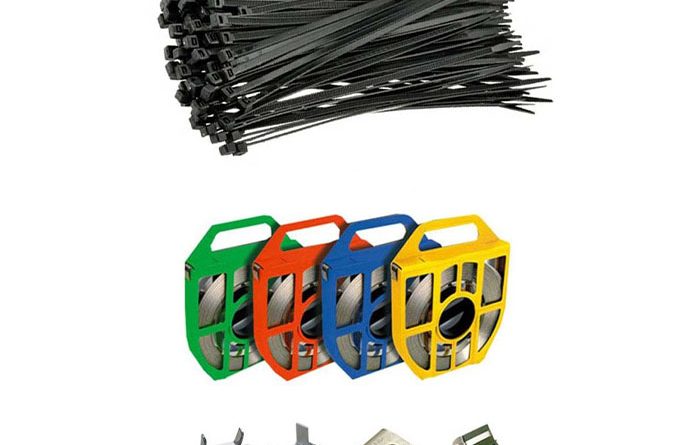
Nylon Cable Ties vs Stainless Steel Strapping
Choosing between Nylon Cable Ties vs Stainless Steel Strapping is a common task for buyers. However, it’s not just about the cost; it’s about what your project needs. In this guide, we will look at both options. This will help you find the most suitable solution for your needs.
What are these Fasteners?
First, let’s look at Nylon ties. As we mentioned in our post, About the Nylon Cable Ties Introduction, these are plastic fasteners. They are very light and cheap. Because they are easy to use, many people prefer them for indoor work.
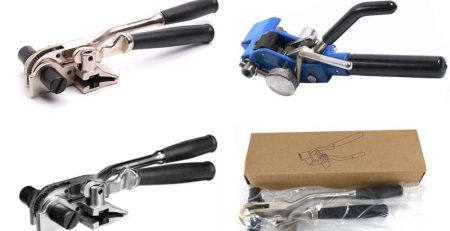
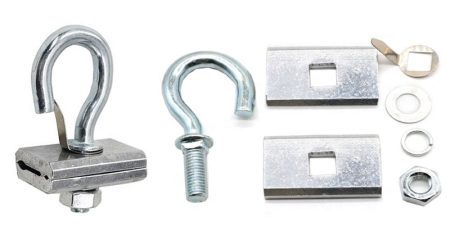
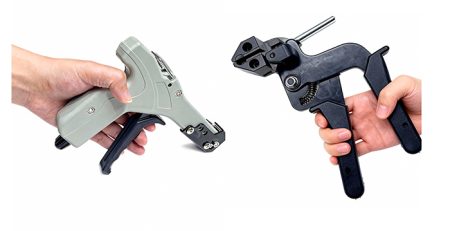
In contrast, steel bands are for heavy tasks. As shown in our article about Stainless Steel Strapping, these are made of strong metal and you can choose different materials to suit your needs. To use them, you also need a Steel Buckle. Furthermore, you must use a Banding Tool to tighten them correctly. Even though it needs more, that doesn’t mean it’s harder to use. Next, we’ll show you the main differences between these two products.
Nylon Cable Ties vs Stainless Steel Strapping: Key Differences
To help you choose, here is a simple comparison:
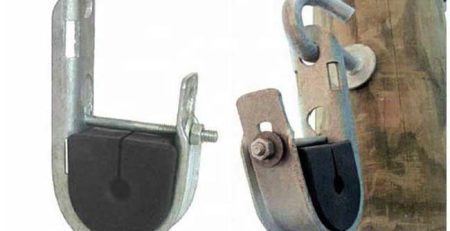
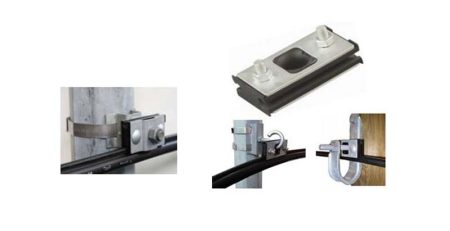
Strength: Nylon is for light loads. Standard ties usually hold between 18 lbs and 250 lbs. Even heavy-duty nylon can fail under constant mechanical vibration or heavy industrial loads. While, stainless steel bands can hold very heavy weights. They can easily handle over 2,000 lbs of tension. For securing heavy metal pipes, traffic signs, or thick power cables on utility poles, stainless steel is the only safe option.
UV Exposure: Standard nylon ties degrade quickly under direct sunlight. They become brittle and snap within 1-2 years. Although “UV-stabilized” nylon exists, it still cannot match the natural resistance of steel.
Temperature Extremes: Nylon struggles above 85°C. However, stainless steel remains stable from -80°C up to over 500°C. This makes steel essential for oil refineries, steam pipes, and aerospace applications.
Chemical and Corrosion Resistance: In marine environments, salt spray will not affect high-grade 316 stainless steel. Nylon, while resistant to some chemicals, can absorb moisture and lose strength over time.
How to Choose the Right One?
According to the comparison, does this mean that stainless steel banding straps are always better than Nylon? Perhaps not.
Initially, you should check your budget. If you need a low-cost fix for an office, nylon is great. Additionally, it is non-conductive, which is safer for some electrical jobs.
Alternatively, if your project is outdoors, then choosing stainless steel straps might be a good option. For instance, marine and oil projects face salt and rust. Consequently, only stainless steel can survive these harsh conditions. In short, steel saves you money on repairs in the long run.
Conclusion
To summarize, Nylon Cable Ties vs Stainless Steel Strapping both have unique benefits. Use nylon for easy, indoor tasks. Choose stainless steel for heavy, outdoor industrial work. Regardless of your choice, we hope this guide helps your decision. If you are looking for a reliable supplier or need sourcing assistance, Hongjing is ready to support your business.