ADSS Anchor Clamp: Types, Applications and Selection Guide
Introduction
In aerial fiber optic networks, every component plays a role in keeping the system stable. While the cable itself carries the signal, hardware fittings ensure that the cable stays secure under different conditions. Among these fittings, the ADSS anchor clamp is one of the most important. It is widely used in overhead installations where the cable must stay fixed under tension. Without proper anchoring, the cable may move, sag, or even get damaged over time.
In this guide, we will explain what an ADSS anchor clamp is, how it works, where it is used, and how to choose the right one for your project.
1. What Is an ADSS Anchor Clamp
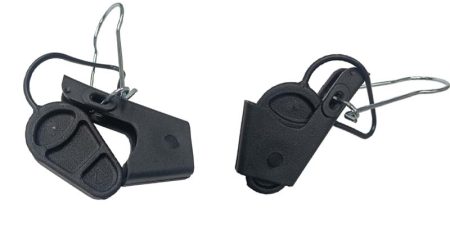
An ADSS anchor clamp is a hardware fitting used to fix ADSS fiber optic cable on poles or towers. People also call it an ADSS tension clamp or dead-end clamp. Its job is simple, but very important. It grips the cable firmly and keeps it in position when the line is under tension.
Unlike a suspension clamp, which mainly supports the cable along the route, an anchor clamp works at a point where the cable must stop, turn, or take higher tension. For this reason, it is often used at the end of a line, at an angle tower, or at a point where the route changes direction.
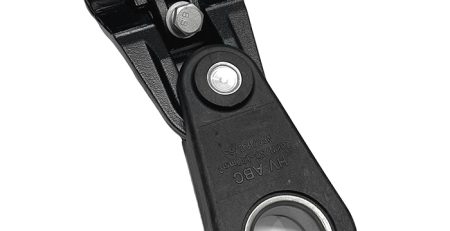
The clamp usually has a body, wedges, and a connecting part. When the cable is placed inside, the wedges hold it tightly. As the tension on the line increases, the clamp maintains a strong grip. This helps prevent cable slipping and protects the cable jacket from damage.
In short, an ADSS anchor clamp is not just a fixing part. It is a safety and stability part in the whole aerial network.
2. Why ADSS Anchor Clamps Matter
Many people only notice the cable, but the hardware behind the cable is just as important. If the clamp is not suitable, the whole line may face problems later.
First, the clamp helps keep the cable stable. It prevents the cable from moving when the line is under load. This is very important in outdoor fiber systems, especially in long-span or high-tension areas.
Second, it helps protect the cable. A good anchor clamp holds the cable securely without damaging the outer jacket. That means less mechanical stress and a lower risk of failure over time.
Third, it supports the whole installation. In real projects, cables often run across roads, rivers, buildings, or open land. These routes are not always straight or easy. The anchor clamp helps the line stay fixed in the right position, even when the environment changes.
Because of these reasons, choosing the right ADSS anchor clamp can improve both safety and long-term performance.
3. Typical Application
ADSS anchor clamps are used in many aerial fiber projects. Their role changes a little depending on the route and the installation point, but the main purpose stays the same: hold the cable securely under tension.
Terminal points
At the end of a line, the cable needs to stop in a fixed position. In this case, the anchor clamp gives strong support and keeps the cable from moving. This is one of the most common uses.
Angle towers
When the route changes direction, the cable faces more force. The line does not just pull straight; it also bends. At these points, the anchor clamp helps hold the cable and manage the extra tension.
Long-span routes
Some projects cross wide open areas, such as roads, valleys, or rivers. These routes often need stronger support because the span is longer and the tension is higher. In these cases, a suitable anchor clamp is very important.
Harsh outdoor environments
ADSS cable is often installed outdoors for many years. So, the clamp must work in wind, rain, sunlight, and sometimes coastal or cold environments. In these conditions, material quality matters a lot. Good UV resistance and corrosion resistance can help extend service life.
So, while the product may look small, it plays a big role in real-world installations.
4. How an ADSS Anchor Clamp Works
The working principle of an ADSS anchor clamp is simple, but effective.
The clamp usually uses a wedge design. The cable goes into the clamp, and the wedges press it in place. When the cable is pulled by tension, the grip becomes tighter. This helps the clamp hold the cable firmly without letting it slip.
At the same time, the outer body keeps the wedges stable. The connection part joins the clamp to a pole, bracket, or tower fitting. Because of this structure, the clamp can bear load and still keep the cable safe.
This design is widely used because it is reliable, easy to install, and suitable for different outdoor projects.
5. Classification of ADSS Anchor Clamps
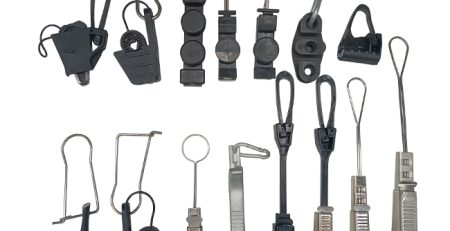
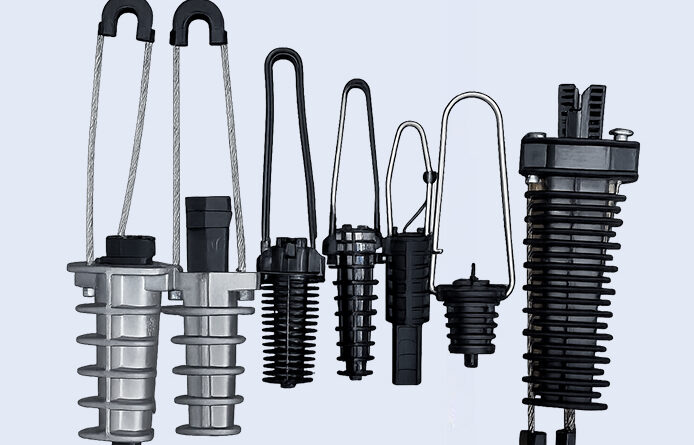
Not all ADSS anchor clamps are the same. Different projects need different sizes, load levels, and materials. That is why classification is important. If you understand the basic types, it becomes much easier to choose the right one.
5.1 Classify by span length
One common way to classify anchor clamps is by span length.
Short-span anchor clamps are used for shorter routes and lower tension. They are often seen in FTTH or access network projects. Hongjing AC560 will do the job.
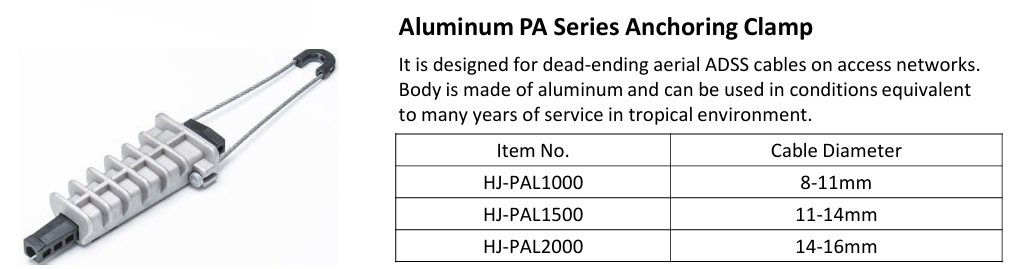
Medium-span anchor clamps are suitable for standard aerial lines. They balance holding force, size, and installation convenience. You can choose Hongjing Aluminum PA Series Anchoring Clamp.
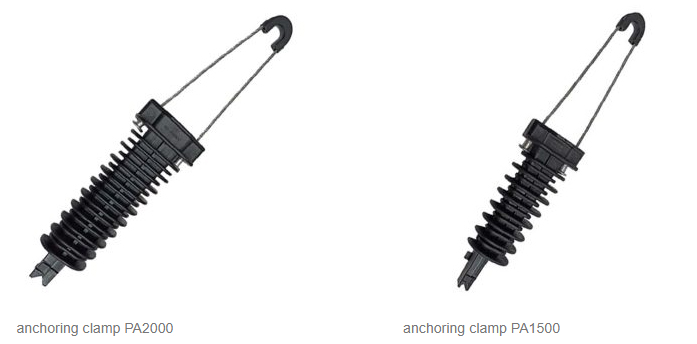
Long-span anchor clamps are made for higher tension and more demanding routes. These are used when the cable needs to cover a longer distance and face stronger force.
5.2 Classify by cable diameter
Another important factor is cable diameter. Every clamp has a specific cable size range. If the cable is too small, the grip may be weak. If the cable is too large, installation may become difficult or unsafe.
That is why cable diameter should always be checked before selection. In most projects, the cable size is one of the first things to confirm. Once that is clear, the correct clamp size becomes much easier to choose.
5.3 Classify by load rating
Anchor clamps also differ by load level. Some are made for light-duty use, while others are made for medium or heavy-duty lines.
A light-duty clamp may work well for short distribution lines. A medium-duty clamp is often used in regular outdoor fiber projects. A heavy-duty clamp is better for long-span or high-tension applications.
Load rating is one of the most important selection factors. It directly affects line safety and service life.
5.4 Classify by material and structure
Material choice also matters.
Some anchor clamps use plastic or polymer wedges for cable protection and grip. Some use metal bodies for stronger support. Others include stainless steel parts for better corrosion resistance.
In outdoor use, material quality can affect many things, including durability, weather resistance, and long-term stability. If the project is in a wet, salty, or high-UV area, material selection becomes even more important.
5.5 Common specification points
When you check an ADSS anchor clamp, you should look at these points:
- cable diameter range
- working load
- material
- application scenario
These details help you judge whether the clamp fits the project or not.
6. How to Choose the Right ADSS Anchor Clamp
Choosing the right clamp is not difficult if you follow a clear process.
First, check the cable diameter. This is the basic requirement. The clamp must fit the cable properly. Next, look at the span length. A short line does not need the same clamp as a long-span route. Then, consider the installation point. Terminal points, angle towers, and straight routes may need different hardware choices. After that, think about the environment. High UV, strong wind, salt air, and low temperature can all affect performance. Finally, check the load requirement. The clamp should be strong enough for the actual project condition.
When you follow these steps, it becomes much easier to make the right choice and avoid costly mistakes.